Late Antique settlements-refugees in Slovenia
Spatial ability of geographic terms

(Boštjan Burger, November 2025)
The phenomenon of Late Antique refuge settlements in the territory of present-day Slovenia can be situated within the broader context of the disintegration of the Roman Empire between the 4th and 6th centuries CE. During this period, the increasing insecurity of life in the lowlands—caused by recurrent invasions and political instability—prompted the local, predominantly Romanized population to withdraw to more inaccessible and defensible locations. On elevated terrain, fortified settlements were established that fulfilled a dual role: they functioned both as permanent residential communities and as places of refuge in times of crisis.
The siting of these settlements was deliberate, favoring steep hillsides, rocky escarpments, and naturally protected positions that afforded strategic advantages. In addition to exploiting natural defenses, inhabitants constructed stone fortifications, towers, and in some cases multiple concentric walls. Within these enclosures, simple domestic structures, ancillary economic buildings, and occasionally ecclesiastical architecture were erected, the latter attesting to the penetration of early Christian traditions into the region.
Economic activity in these communities was sustained through terrace agriculture, animal husbandry, and foraging. Although demographically modest, the settlements preserved elements of Roman cultural practice while simultaneously adapting to altered socio-political circumstances.
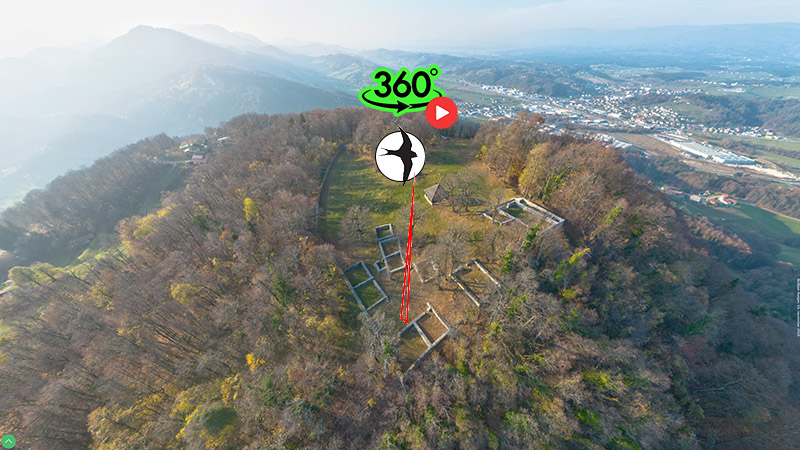
Rifnik near Šentjur
One of the largest and most extensively fortified examples of Late Antique refuge settlements.
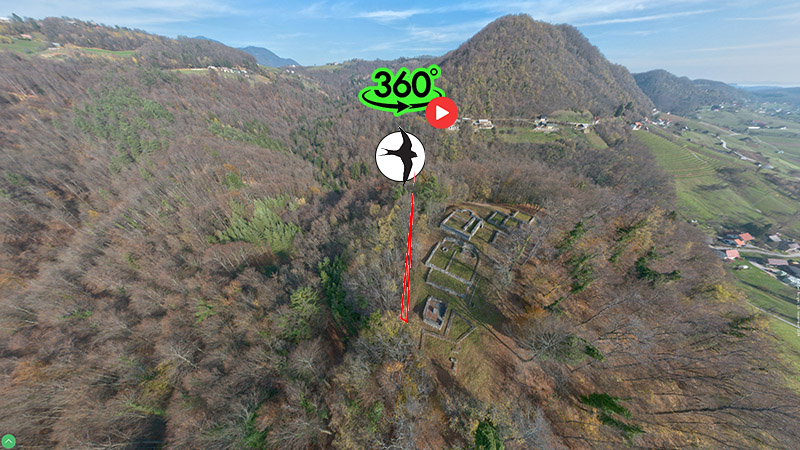
Ajdovski Gradec near Vranje
A strategically chosen hillfort serving as a safe refuge during barbarian invasions.
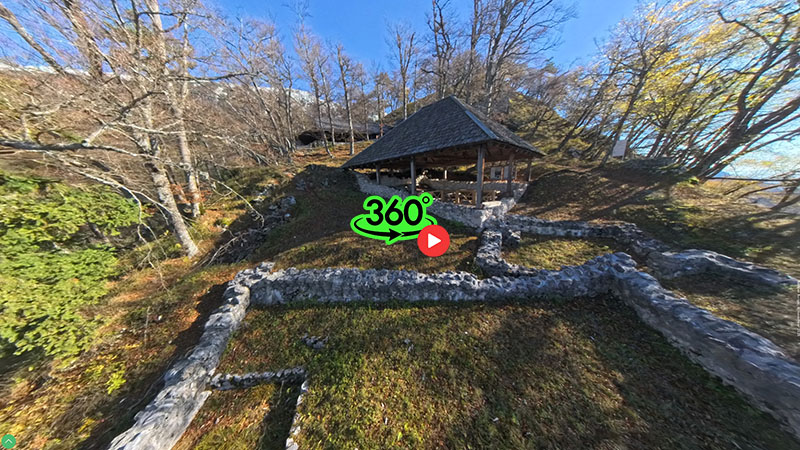
Ajdna above Potoki
Notable for the remains of an early Christian church perched high above the valley.
Other significant sites include the Ajdovske Caves near Krško, which served as a natural refuge, and Gradišče near Ljubljana, strategically positioned on elevated terrain. These settlements constitute an important testimony to the continuity of habitation in the Slovenian lands. They demonstrate that Romanized populations persisted beyond the collapse of imperial authority and that such fortified communities provided the structural antecedents for early medieval strongholds. Today, they represent valuable archaeological loci, offering insight into patterns of settlement, defense, and cultural transformation during a period of profound historical transition.
The Paradox of Ajdna and Ajdovščina: Christian Refuge Sites Named After Pagan Giants
The names of places like Ajdna and Ajdovščina in Slovenia reflect a deep paradox: they were once late antique Christian refuges built to withstand pagan invasions, yet today they bear names associated with ajdi—mythical pagan giants. This contradiction reveals how folk tradition can overwrite historical reality, transforming Christian heritage into symbols of a forgotten pagan past.
Etymology and Mythical Layers
The Slovene word ajd originates from the Old Slavic ajdinŭ, meaning heathen or non-Christian. Over time, it evolved in folk culture to signify giants, ancient beings, and builders of mysterious ruins. These mythical figures were imagined as powerful, pre-Christian entities who shaped the landscape.
- Ajdovščina: Derived from Ajdova hiša (“House of the Ajd”), suggesting a settlement of mythical giants. Historically, it was the Roman fort Castra, later a Christian stronghold.
- Ajdna: A fortified late antique settlement perched at 1046 meters above sea level. Despite its Christian origins, its name evokes the ajdi—legendary giants who supposedly lived there.
Folk Legends and Narrative Transformation
In Slovene folklore, ajdi are giants with supernatural strength who built fortresses, churches, and bridges. They represent pagans from a pre-Christian era or guardians of hidden treasures buried in caves. According to legend, the ajdi of Ajdna fled from Christian persecution, symbolizing the triumph of the new faith, even though history tells us it was the Christians themselves who lived there seeking safety.
Critical Reflection: History vs. Myth
This tension between historical fact and myth raises compelling questions: Why are Christian fortresses named after pagan giants? Is this due to the loss of historical memory or does it reflect a symbolic reinterpretation where ajdi represent ancestral power? The true strength of Slovene folklore lies in its ability to transform history into myth—and myth into identity.
Selected References
Ciglenečki, S. (1987). Poznoantična naselbinska zatočišča v Sloveniji. Arheološki vestnik 38.
Ciglenečki, S. (1995). Ajdna: poznorimska naselbina v zahodnih Karavankah. Ljubljana: ZRC SAZU.
Horvat, J. (1990). Rifnik pri Šentjurju: poznoantična naselbina. Ljubljana: Narodni muzej Slovenije.
Šašel Kos, M. (1997). The End of the Roman World in Slovenia. Oxford: Clarendon Press.
Hrobat, K. (2005). Ajdi z Ajdovščine nad Rodikom. Studia Mythologica Slavica 8.