
Log - Log pod Mangrtom (640 m) - also known as Log pod Mangartom. The settlement consists of Gorenji Log (Upper Log) and Spodnji Log (Lower Log). Log is situated in a mountain amphitheater surrounded by numerous 2000-meter peaks, dominated by the Loška stena wall. Numerous streams with waterfalls flow from beneath it, making Log one of the most picturesque Alpine villages in Slovenia.
In Gorenji Log stands the 18th-century parish church of St. Stephen, featuring ceiling paintings by the renowned Slovenian impressionist Ivan Grohar. Between Spodnji and Gorenji Log, at the foot of Ovčja gora, is the entrance to a 4.5 km long tunnel ("Štoln"). Completed in 1903, it served as a drainage tunnel for the lead mine in Raibl (Cave del Predil, present-day Italy). Interestingly, an electric railway operated through the tunnel during World War I. The Predel road connects the settlement with the mountain pass of Predel.
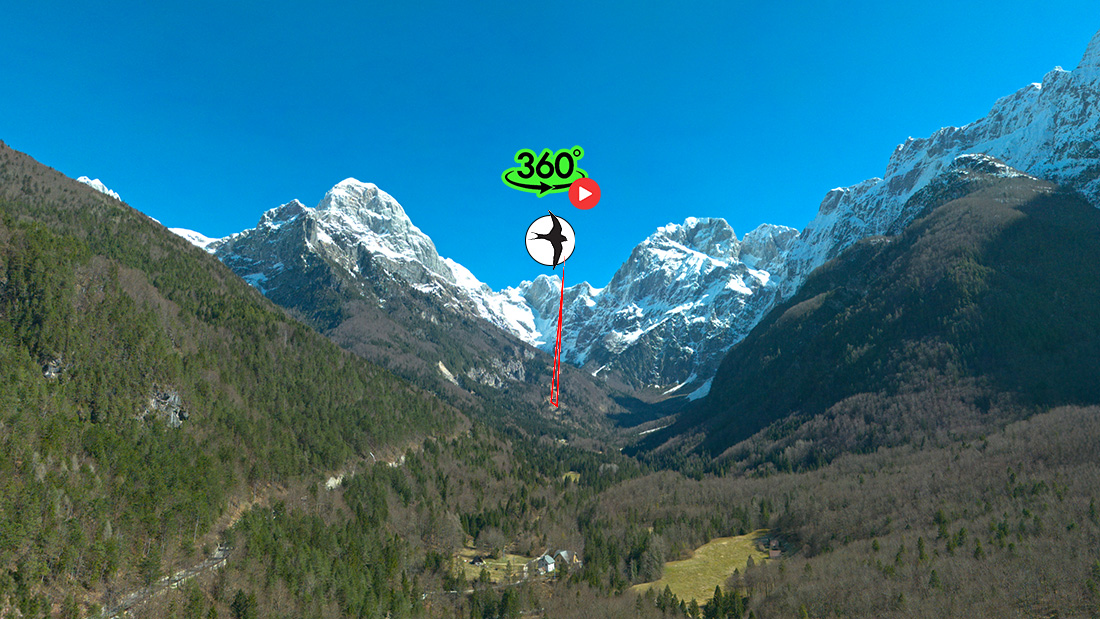
(Aerial view of Loška Koritnica Valley)
Log pod Mangrtom is a village nestled in the embrace of one of Slovenia’s most majestic mountains. Mangrt, with its pyramidal silhouette and sharp ridges, does not merely stand above the village – it stands within its character, its rhythm, and its memory. In Log pod Mangrtom, one quickly senses that nature is not a backdrop but a companion. The mountain speaks through the wind, through the light breaking across its northern walls, and through the silence that settles over the valley as day turns to evening.
The village is pressed between the steep slopes of Mangrt and the wild yet beautiful Lepena, which further down flows into the Soča. This geographical confinement is not a limitation but a framework that has shaped life here for centuries. People learned to live with nature, not against it. In Log pod Mangrtom every path is steep, every step deliberate, and every upward glance a reminder that humans are merely guests in a world shaped by geological eternity.
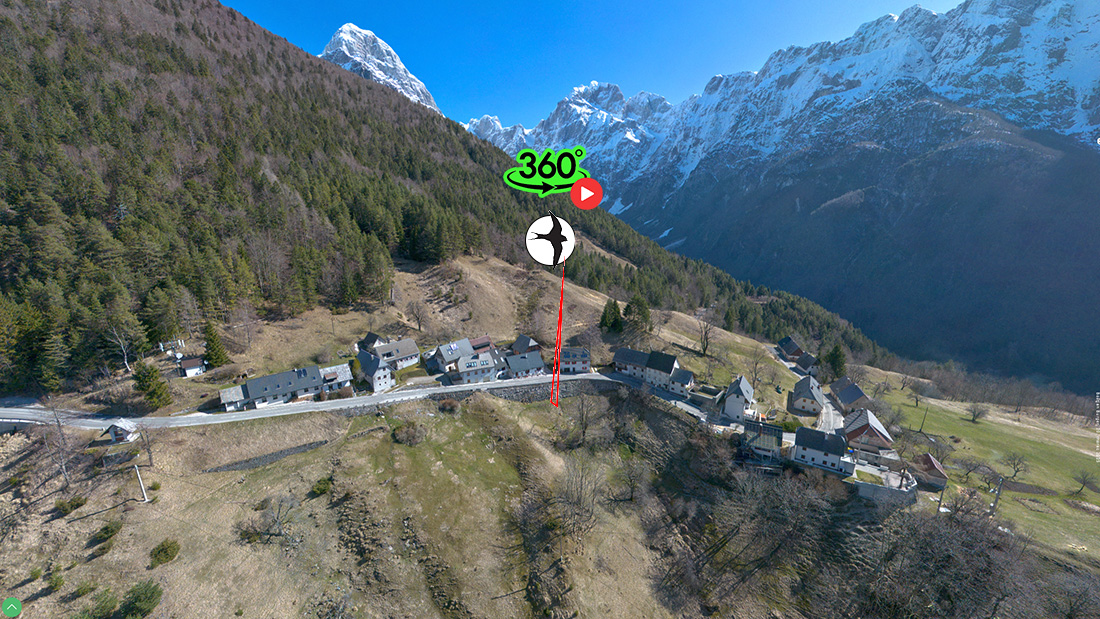
(Aerial View of Strmec)
But Log pod Mangrtom is not only a place of natural beauty. It is also a place marked by history, often harsh. The First World War brought trenches, wire, and suffering into these mountains. Near the village, remnants of fortifications and military paths still stand, bearing witness to a time when the valley was filled with soldiers of many nations. Yet the village preserved its identity – not as a place of war, but as a place of resilience.
I myself explored the area around Log pod Mangrtom precisely during the period when nature revealed its most unforgiving face. The massive debris flow of 2000 destroyed part of the village and forever altered the landscape. The Predilnica valley, which I had known well before, became completely unrecognizable after the slide. The waterfalls I had documented before the disaster survived only as memories; where water once carved its familiar paths, a scar remained – a reminder of a world that no longer existed. Walking there after the catastrophe felt like stepping through a space that had lost its past and had not yet found a new identity.
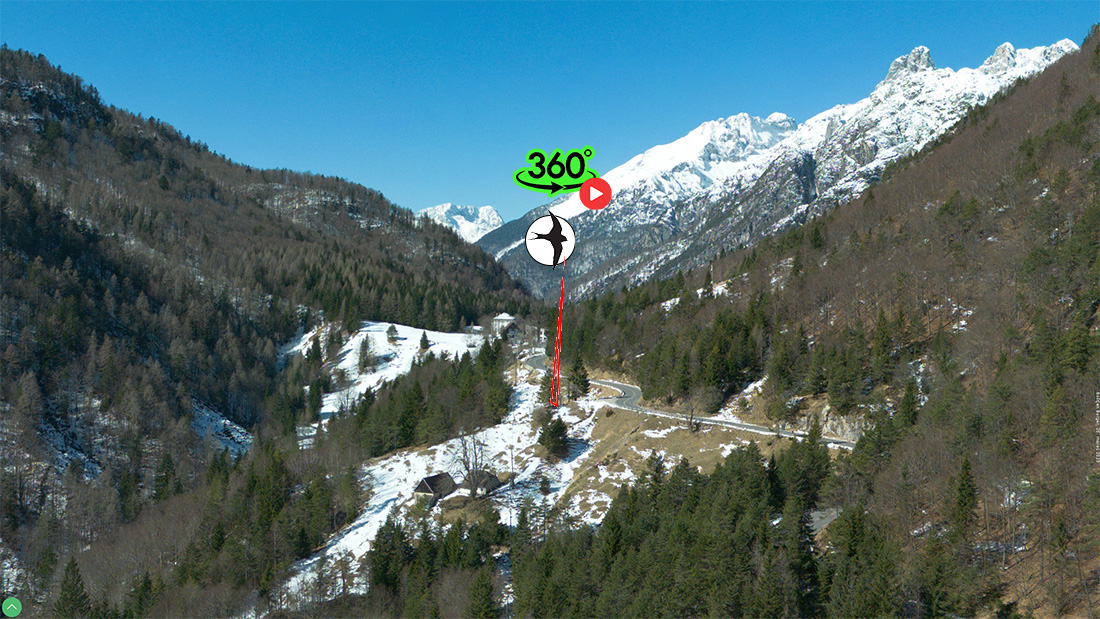
(Aerial view of Predel)
Yet this tragedy revealed something essential about the people living beneath Mangrt: an extraordinary ability to recover, rebuild, and continue. Today, Log pod Mangrtom is restored, orderly, alive. It has not forgotten, but it has not bowed. In this lies its strength – and its quiet nobility.
The village is also a gateway to one of the most breathtaking mountain realms in Slovenia. Mangrt Saddle, rising above the village, is reached by the highest road in the country, winding in serpentine curves toward views that take one’s breath away. From there, paths lead toward Mangrt, Jalovec, Loška stena, and the wild basins where one feels the primal essence of the Julian Alps. Log pod Mangrtom is thus a place where homeliness meets wilderness, where houses with red roofs lean against a world that remains untamed.
But what defines Log pod Mangrtom most deeply are not only the mountains, the history, or the natural features. It is the people. People who know how to greet, how to tell a story, how to live in the rhythm of nature. People who understand that life beneath a great mountain is both a privilege and a responsibility. In their relationship to the land there is something ancient, something that is disappearing elsewhere: respect.
Log pod Mangrtom is therefore more than a village. It is a symbol. A reminder that humans are part of nature, not its masters. A testament that even from tragedy, new strength can emerge. And it is a place where a visitor does not feel like a tourist, but like someone briefly allowed to step into a world shaped by a mountain – mighty, beautiful, and unyielding.