

Socerb Castle (also known as Soverb or Strmec Castle) is situated on a prominent Kraški rob (Karst edge) above Trieste, where the Karst plateau suddenly drops into a steep slope towards the Adriatic Sea. Its location is extremely strategic: from an elevation of approximately 440 meters above sea level, it overlooks the entrance to the Gulf of Trieste, the routes between Istria and Trieste, and the passages between the Karst interior and the coast. Consequently, the castle served as an important military outpost, observation point, and a symbol of control over this region for centuries.
The castle is positioned on the edge of the Karst Plateau, just above the village of Socerb (municipality of Koper), only a few hundred meters from today's Slovenian-Italian border. From the castle walls, one can enjoy one of the most beautiful views of the Gulf of Trieste, Duino, Muggia, and broader Istria. Located beneath the castle is also the famous Holy Cave (Sveta jama), the only underground church in Slovenia, which has been associated with the castle estate for centuries.
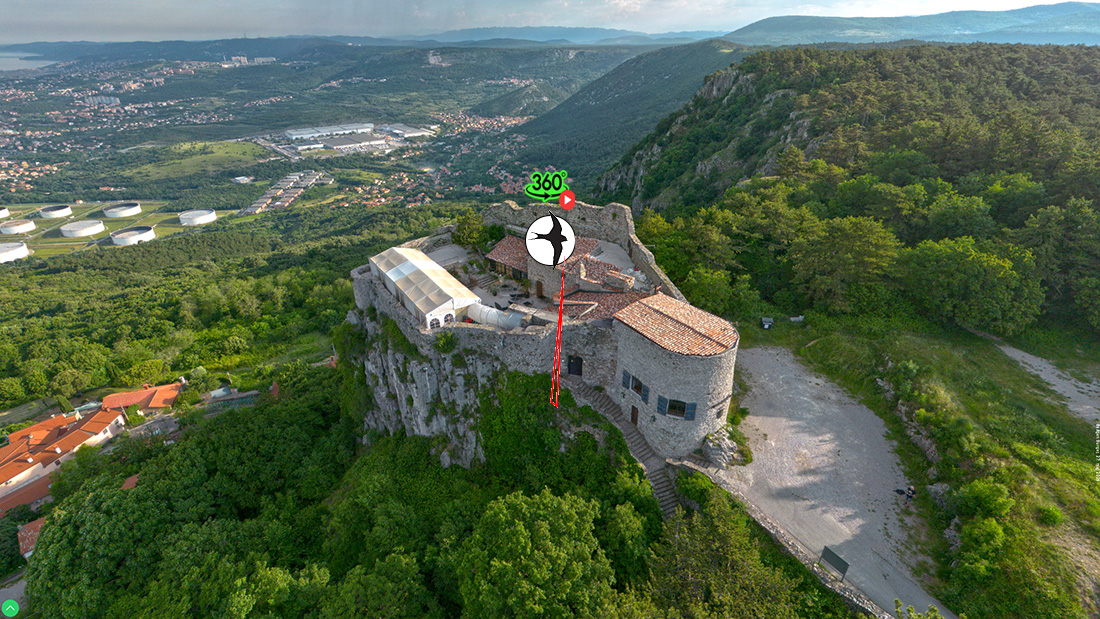
The purpose of the castle changed according to political circumstances and owners:
• Military fortress: due to its location, the castle was originally designed as a defensive outpost controlling the routes between the Karst and the coast.
• Feudal center: in the Middle Ages, it became the seat of local lords who managed the surrounding villages and lands.
• Observation point: in the early modern period, it served as a watchtower against Ottoman incursions and later as a checkpoint for trade routes.
• Residential residence: in the 17th and 18th centuries, the owners renovated it into a more comfortable dwelling.
• Military use in the 20th century: during both World Wars and after WWII, it was again utilized for military needs.
Early Sources and the Middle Ages
The first written records of the castle date back to the 11th century, when it was mentioned as a fortress associated with the Patriarchate of Aquileia. In the 12th and 13th centuries, it passed into the hands of the Counts of Gorizia, and later into the possession of the Habsburgs, who frequently granted it as a fief to various noble families.
Early Modern Period
In the 16th century, the castle suffered damage during Ottoman raids and subsequent conflicts between the Venetians and the Habsburgs. It was renovated in the 17th century and partially converted into a more comfortable residence. During this time, owners from the Petazzi, Rota, and Raspor families appear in historical records.
19th Century
Following the collapse of the feudal system, the castle lost its strategic importance. In the 19th century, it changed owners several times, partially falling into ruin and partially being used as a rural estate.
20th Century
During World War I, it was damaged due to its proximity to the front. After the Treaty of Rapallo, the area fell to Italy, and the castle served as a military-controlled point during the interwar period. After World War II, it became part of Yugoslavia and later the Republic of Slovenia.
Ownership of the castle changed frequently over the centuries:
• Medieval feudal owners (Counts of Gorizia, Habsburgs, various noble families),
• Transitions between private owners in the 19th century,
• Partial military use in the 20th century,
• It became social property after World War II,
• Today, the castle is owned by the Republic of Slovenia and managed by the Public Institute for Heritage Management or local institutions responsible for maintenance and tourism.
Today, Socerb Castle is:
• A tourist destination with an exceptional view,
• A venue for cultural events, weddings, and small gatherings,
• An excursion point for hikers and cyclists,
• A nearby catering facility complements the offer,
• A starting point for visiting the Holy Cave, which is open at specific times.
Although the castle is partially in ruins, the walls, entrance section, and courtyard are preserved, allowing visitors to experience its historical character and strategic position.
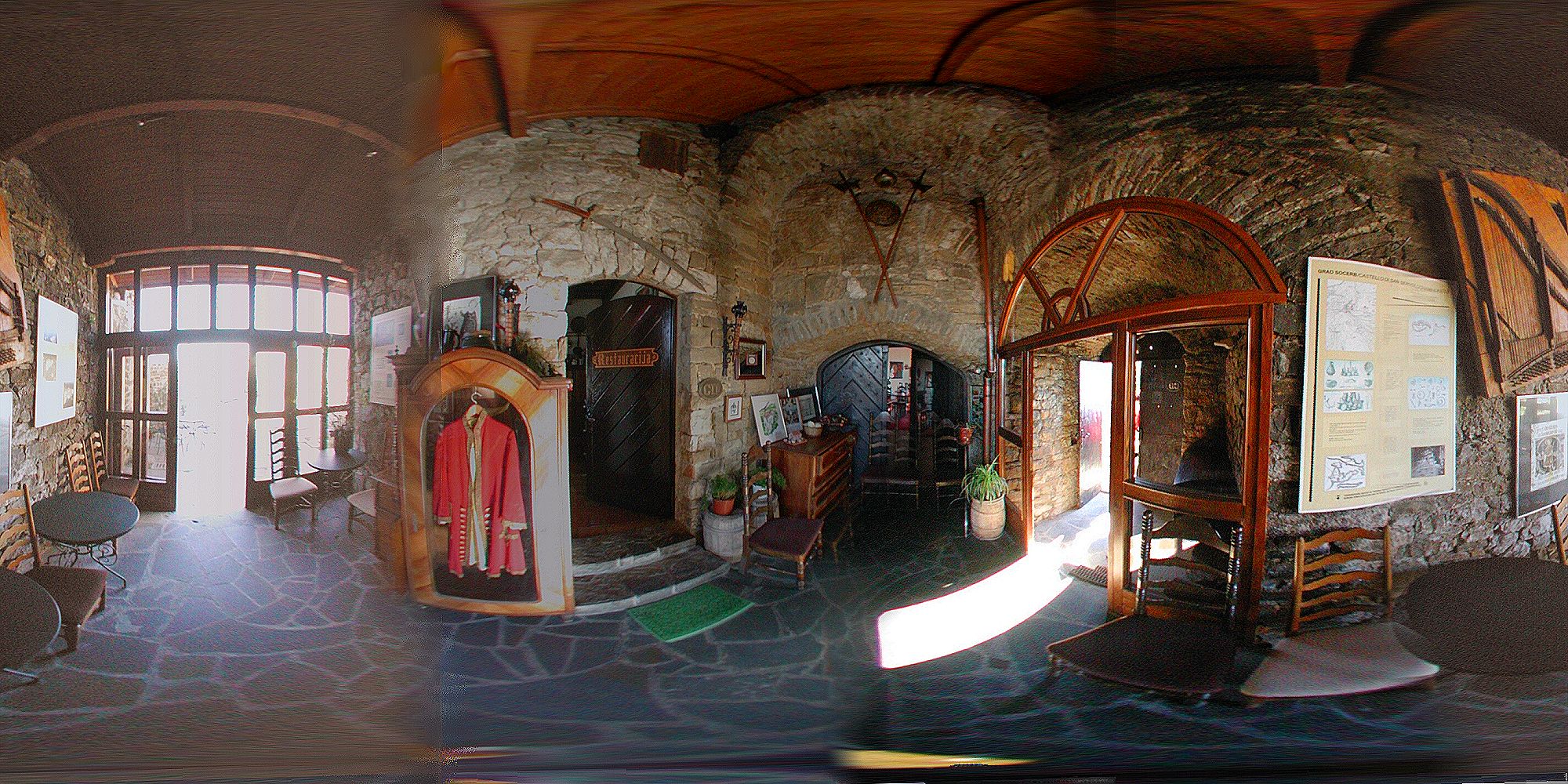
Socerb leta 2001