

Gradišče (Pustinjak) above Bašelj is an archaeological site in the northern part of the Kamnik–Savinja Alps, frequently treated as an example of a Late Antique–early medieval refuge. The text below brings together a geographical outline, archaeological data, an assessment of possible plundering, and the question of settlement continuity.
Geographical Outline
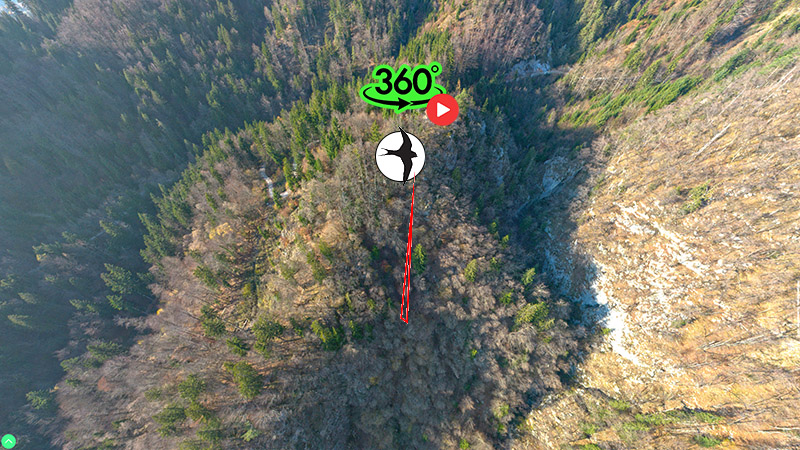
Gradišče above Bašelj stands at approximately 871 m above sea level above the village of Bašelj; the summit overlooks the torrent valley of the Belica stream and lies beneath the southern slopes of Storžič, giving it a strategic position over transport and grazing areas in the Preddvor region. The topography is distinct: a flat, rocky upper plateau with local rock outcrops and precipices is surrounded by forested slopes, providing a good overview of the surrounding valleys and offering natural fortification compared to other Alpine refuges. Architectural remains, scattered embankments, earthworks, and small stone walls are visible on the summit and in its immediate vicinity.
Late Antique Classification and Function
Specialist literature classifies Gradišče among Late Antique or Late Antique–early medieval shelters. Archaeological and field descriptions, along with available finds, indicate activity during the transitional period from antiquity to the Middle Ages, particularly in the 8th and 9th centuries, confirming the site's multi-phase habitation. The topographical position and structural adaptations correspond to the function of a refuge: the high-mountain peak served as a temporary or seasonal shelter for the population during periods of instability.
Archaeological Research and Discoveries
The first documented field surveys and excavations were recorded in archives at and after the beginning of the 20th century, with noted works in 1939 and 1998. The period 2010–2015 brought a systematic completion of research within international interdisciplinary projects. Finds include material for daily use and rituals (e.g., small object inventory, a tool interpreted as an incense burner). The area has been declared an archaeological monument of national importance.
Plundering and Violent Events
For now, there is no unambiguous archaeological evidence to confirm a catastrophic plundering of Gradišče in terms of extensive fire or mass destruction. The stratigraphic profile does not show clear, uniform layers of widespread burning or a large quantity of military remains. However, this does not exclude the possibility of individual clashes or raiding actions during times of instability.
Continuity of Habitation
Archaeological data point to a multi-phase occupation with a peak in the 8th and 9th centuries. There is no evidence of continuous, intensive habitation beyond this period; written sources only mention the place in later centuries, which may indicate occasional use of the location or the preservation of the name, but not permanent habitation throughout the high Middle Ages.
Written Sources and Literature
“Za vero staršev” (For the Faith of the Parents) — catalogue/thematic display of the Department of Archaeology, Faculty of Arts, presentations of material from Gradišče above Bašelj.
Decree on the Proclamation of the Gradišče above Bašelj Archaeological Site as a cultural monument of national importance, Official Gazette of the Republic of Slovenia.
Karo, Špela; Lavrič, Maja; Mlekuz Vrhovnik, Dimitrij — The Gradišče above Bašelj Archaeological Site: Interpretation of Architectural Remains on the Basis of Interdisciplinary Research.