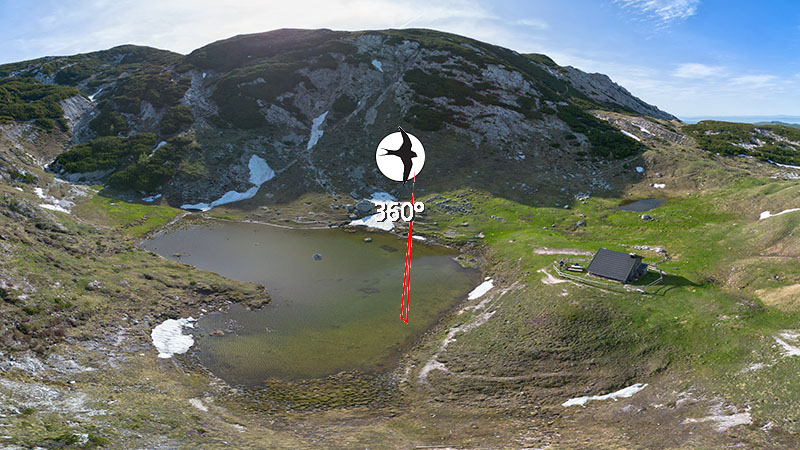

Vodotočnik is a high‑mountain lake with a distinctive heart‑shaped form, situated in the very core of the Kamnik–Savinja Alps. In summer, livestock from the surrounding alpine pastures graze along its shores, creating the image of a traditional Alpine cultural landscape, while the area retains that rare, almost archaic mountain tranquillity that is increasingly difficult to find in the Alps. The lake is of natural origin – a rarity in this part of the range, where the limestone bedrock typically causes rapid drainage and prevents the formation of permanent water bodies. For this reason, Vodotočnik is one of the few stable high‑mountain aquatic ecosystems in the region.
Several marked trails lead to the lake, suitable for hikers of varying experience. The most frequented route begins at Planina Podvežak and requires about 1 hour and 45 minutes of walking along a well‑maintained marked path. Another option is the longer and somewhat more demanding ascent from the Podvolovjek valley, which passes Planina Korošica and continues beneath the imposing cliffs of Molička peč. Both routes offer scenic views and transitions between alpine pastures, scree slopes, and high‑mountain meadows.
The significance of Vodotočnik extends beyond its aesthetic value. High‑mountain lakes are important hotspots of biodiversity, providing habitats for numerous specialised plant and animal species adapted to cold, moist, and nutrient‑poor conditions. Preserving such lakes is essential for understanding natural processes in the high mountains and for safeguarding sensitive ecosystems that are becoming increasingly vulnerable due to climate change.
The area is popular among hikers who appreciate unspoilt nature, silence, and a sense of remoteness. Owing to its location, natural value, and traditional land use, Vodotočnik represents one of the finest examples of harmonious coexistence between humans and high‑mountain nature in the Kamnik–Savinja Alps.
Vodotočnik is a natural high‑mountain lake. It formed in a natural depression composed of less permeable rock and debris, which allows water to accumulate despite the predominantly limestone substrate. There are no references in the literature or field descriptions indicating an anthropogenic origin (such as damming, excavation, or terrain modification). It is a natural geomorphological feature preserved due to specific local conditions.